 Spanish
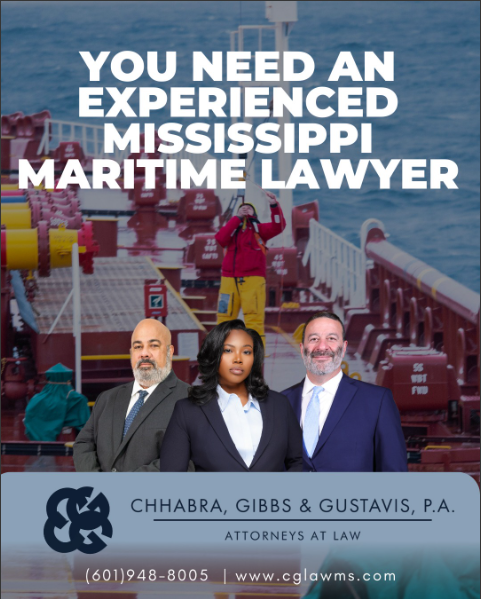
Mississippi’s proximity to the Gulf Coast means thousands of workers earn a living on offshore rigs, vessels, barges, and other maritime operations. While these jobs provide steady income, they also come with serious risks and a very different legal system when injuries happen.
Maritime law, also known as admiralty law, is a specialized area of federal law that governs accidents on navigable waters. Unlike standard workplace injuries handled under Mississippi workers’ compensation laws, maritime claims involve federal statutes, unique employer duties, and additional protections for injured workers.
For offshore workers, understanding these rights is key to securing proper compensation.
What Makes Maritime Law Different
Maritime law operates separately from traditional injury law. If you are injured offshore or on a vessel, your case will likely fall under federal law rather than Mississippi law. This affects how your claim is handled, what compensation is available, and what you must prove.
Key laws include the Jones Act, the Longshore and Harbor Workers’ Compensation Act, and general maritime law. Each applies depending on your role, where you work, and how the injury occurred.
The Jones Act and Seamen Rights
The Jones Act is one of the most important protections for maritime workers. It allows qualifying seamen to file claims against their employer if negligence played any role in their injury.
To qualify, you must spend a significant portion of your job working on a vessel in navigation.
Under the Jones Act, injured workers may recover damages for medical expenses, lost wages, and pain and suffering. Even partial employer fault can be enough to support a claim.
Maintenance and Cure
Regardless of fault, injured seamen are entitled to maintenance and cure.
Maintenance covers daily living expenses while recovering.
Cure covers necessary medical treatment until you reach maximum recovery.
These benefits must be provided even if no one is at fault, and failure to do so can lead to additional liability for the employer.
Common Maritime Injuries
Offshore work presents unique dangers that can lead to serious injuries.
Equipment and machinery accidents
Slip and fall incidents on wet or unstable surfaces
Exposure to chemicals or toxic substances
Crew transfer accidents involving vessels or helicopters
These incidents often result in severe injuries, including head trauma, spinal damage, or long-term illness.
Employer Responsibilities
Maritime employers have strict duties to protect workers.
They must provide a seaworthy vessel, meaning it is safe, properly maintained, and adequately staffed. This obligation is strict and does not always require proof of negligence.
Employers must also provide a safe work environment, including proper training, equipment, and safety procedures. Failure to do so can result in liability under the Jones Act.
Jurisdiction and Legal Complexity
Maritime cases can be complicated, especially when it comes to determining which laws apply.
Location matters. Injuries in state waters, offshore platforms, or the Outer Continental Shelf may fall under different legal frameworks.
Your job classification also matters. Seamen, longshoremen, and offshore workers may all have different legal rights depending on their role.
What to Do After a Maritime Injury
The steps you take after an injury can directly affect your case.
Report the injury immediately
Seek medical care right away
Document the scene and your injuries
Avoid signing documents without understanding them
Be aware of legal deadlines
Taking these steps early helps protect your rights and strengthens your claim.
Compensation Available
Maritime law allows injured workers to recover a range of damages, including:
Medical expenses and future care
Lost wages and reduced earning ability
Pain and suffering
Maintenance and cure benefits
These damages often go beyond what traditional workers’ compensation provides.
How CGG Law Helps Maritime Workers
At Chhabra, Gibbs & Gustavis, P.A., we understand the unique challenges maritime workers face after an injury. Based in Jackson and Gulfport, we represent offshore workers across Mississippi and help them navigate complex maritime claims.
From investigating your case to pursuing full compensation, our team is committed to protecting your rights every step of the way.
If you’ve been injured offshore, contact CGG Law at 601-948-8005 or visit cglawms.com to learn more about your options.
Share: