 Spanish
Losing someone you love is hard enough. When that loss could have been prevented, it adds a whole different layer questions, frustration, and the need for answers.
In Mississippi, wrongful death claims give families a way to hold the responsible party accountable and get financial support during a difficult time. While nothing replaces your loved one, working with wrongful death attorneys can help protect your future and bring some sense of justice.
What Counts as Wrongful Death?
Under Mississippi law, a wrongful death happens when someone dies because of another person’s negligence, recklessness, or intentional actions.
These cases often come from situations like:
Car, truck, or motorcycle accidents
Medical mistakes or delayed treatment
Workplace or construction accidents
Defective or dangerous products
Unsafe property conditions
Nursing home neglect or abuse
Criminal acts or violence
The key factor is preventability. If the death happened because someone failed to act responsibly, it may qualify as a wrongful death claim.
Who Can File a Claim?
In Mississippi, the case is filed by the personal representative of the deceased’s estate. That person may be named in a will or appointed by the court.
Even though one person files the claim, the compensation goes to surviving family members, such as:
Spouse
Children
Parents
Siblings (in some cases)
Other dependents
Wrongful death attorneys often help families navigate this process, so nothing gets missed during an already overwhelming time.
What Compensation Is Available?
Wrongful death claims can cover both financial and emotional losses.
Economic damages include:
Lost income and future earnings
Loss of household support and services
Medical bills related to the injury
Funeral and burial costs
Loss of inheritance
Non-economic damages include:
Loss of companionship
Loss of guidance (especially for children)
Emotional pain and suffering
Loss of marital relationship
Punitive damages
In cases involving extreme negligence or intentional harm, courts may award additional damages to punish the wrongdoer.
How a Case Is Built
A strong wrongful death case depends on proving:
The other party had a duty of care
They failed in that duty
That failure caused the death
The family suffered losses as a result
Evidence often includes:
Police and accident reports
Medical records and autopsy findings
Witness statements
Financial documents
Expert opinions
Photos or video from the scene
This is where wrongful death attorneys play a big role gathering evidence quickly before it disappears and building a solid case.
Time Limits in Mississippi
Most wrongful death claims must be filed within three years of the date of death. Some exceptions apply, especially in medical cases or claims involving government entities.
Waiting too long can mean losing your right to file altogether, so timing matters.
Important Legal Factors
Comparative fault
Mississippi follows a pure comparative fault rule. If your loved one was partially at fault, the compensation is reduced by that percentage.
Survival actions
These are separate claims that cover what your loved one experienced before passing, like pain and suffering.
Workplace deaths
Workers’ compensation may apply, but third-party claims (against contractors or manufacturers) may still be possible.
What You Should Do Next
If you’ve lost someone due to negligence, a few steps can help protect your case:
Keep all documents and evidence
Write down what you know about the incident
Get official reports
Save receipts and financial records
Avoid giving statements to insurance companies
Don’t accept quick settlement offers
Talking to wrongful death attorneys early can make a big difference in how your case unfolds.
How CGG Law Can Help
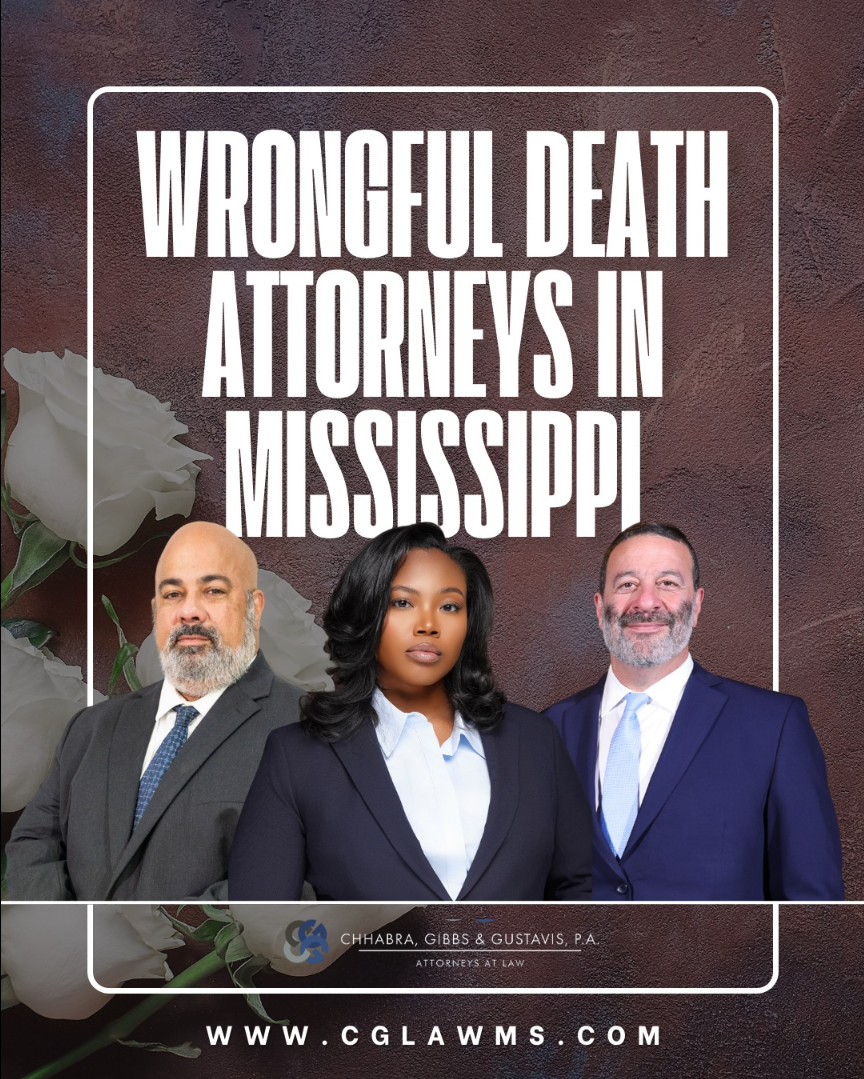
At Chhabra, Gibbs & Gustavis, P.A., families get both legal guidance and real support during one of the hardest times in life. Their team focuses on:
Thorough investigations
Working with trusted experts
Personalized attention to each case
If you need help, you can reach them at 601-948-8005 or visit cglawms.com.
Why These Cases Matter
Wrongful death claims aren’t just about compensation. They’re about accountability.
They help:
Hold negligent parties responsible
Prevent similar tragedies
Give families answers
Provide some level of closure
Share: